Your Phone Didn't Buzz — But Your Brain Thinks It Did, and That's a Whole Thing

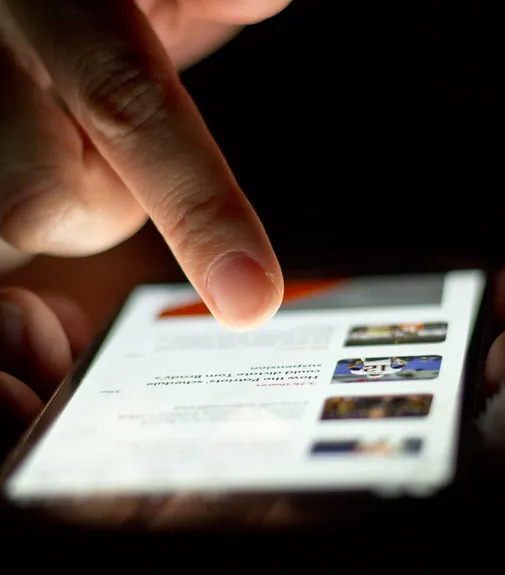
Photo: Basile Morin, CC BY-SA 4.0, via Wikimedia Commons
Somewhere between your third meeting of the day and lunch, your thigh vibrated. You reached for your phone. Nothing. No notification. No missed call. The screen was dark and indifferent.
You've done this. Everybody has done this. It happens enough that researchers gave it a name — phantom vibration syndrome — and it's been documented in studies going back to the early 2000s. But here's what's changed: it's happening more often, to more people, and the neuroscience behind it is starting to paint a pretty striking picture of what constant connectivity has done to the human brain.
Spoiler: your nervous system has been quietly remodeled, and it didn't ask for your permission.
What's Actually Happening in Your Body
To understand phantom vibrations, you need a quick detour into how your brain processes sensation. Your nervous system doesn't just passively receive signals — it actively predicts them. This is called predictive processing, and it's one of the most fundamental things your brain does. Rather than waiting for sensory input and then reacting, your brain is constantly running ahead, generating expectations about what it's about to feel.
This system is incredibly efficient. It's also, apparently, very easy to accidentally train.
When you carry a phone that vibrates frequently enough, your brain starts to treat "possible vibration" as a default prediction. The bar for your nervous system to interpret ambiguous sensory data — the brush of fabric, a muscle twitch, a slight pressure shift — as that's the phone gets progressively lower. You've essentially taught your body to be on permanent standby alert for a signal that may or may not come.
One way to think about it: your brain has installed a push notification for your phone's push notifications.
The Numbers Are Telling
Studies have found that somewhere between 68% and 89% of people who regularly carry smartphones report experiencing phantom vibrations. That's not a niche phenomenon — that's almost everyone. Research published in Computers in Human Behavior found that the frequency of phantom vibrations correlates directly with how often a person actually checks their phone, not just how often it physically buzzes.
In other words, the more anxiously you monitor your phone, the more your brain fills in the blanks when stimulation is ambiguous. The phantom isn't just a sensory glitch. It's a behavioral fingerprint.
The phenomenon is also more common among people who report higher levels of phone-related anxiety — the creeping dread that you've missed something important, that someone is trying to reach you, that the world is moving forward without your awareness. If that description sounds uncomfortably familiar, you're not alone.
When the Phantom Moves
Here's where it gets genuinely strange. Phantom vibrations don't stay in your pocket. People report feeling them in their thigh even when the phone is across the room. Some report them in their hand. Some feel them in their chest. There are documented cases of people experiencing the sensation in limbs where they've never even carried a phone.
This migration pattern suggests the brain isn't just misinterpreting a specific physical location — it's running a generalized alert state, searching across the body for the signal it expects to find. The phone has become so integrated into your mental model of the world that your nervous system is actively scanning for it, the way you might strain to hear your name in a noisy room.
You are, in a very literal neurological sense, always listening for it.
What It Actually Says About Us
Psychologists who study phone behavior describe phantom vibrations as a window into what they call "technoference" — the way digital devices interrupt and reshape our internal experience, not just our external behavior. We talk a lot about screen time and social media habits as behavioral problems. But phantom vibration syndrome is a reminder that the rewiring goes deeper than behavior. It's happening at the level of perception itself.
The brain is plastic. It adapts to what you do repeatedly. And what millions of Americans are doing repeatedly, hundreds of times a day, is reaching for a small glowing rectangle in response to a signal that demands immediate attention. That loop — buzz, reach, check, react — gets encoded. The brain doesn't distinguish between "healthy habit" and "anxious compulsion." It just learns the pattern and optimizes for it.
So when there's no buzz, it sometimes manufactures one. Because that's what it's learned to expect.
The Reset Question
The obvious follow-up is: can you undo it? And the honest answer is — sort of, with effort.
Researchers who study the phenomenon suggest that reducing phantom vibrations requires genuinely disrupting the anticipatory loop, not just limiting screen time. That means changing how you interact with your phone, not just how much. Turning off vibration alerts entirely, switching to scheduled check-ins instead of reactive monitoring, and — this one's harder — actually tolerating the discomfort of not knowing if something came in.
That last part is where most people stall out. Because the phantom vibration isn't just a quirk of neuroscience. It's also a symptom of something culturally true: we've built a world where being unreachable, even briefly, feels like a small emergency. The phone didn't create that anxiety. But it learned to speak its language fluently.
The Loop Your Body Is Running
There's something almost poetic about the fact that our phones don't even have to do anything anymore to command our attention. The ghost buzz is your nervous system doing the phone's job for it — generating the alert, prompting the reach, completing the loop entirely without external input.
You've been so thoroughly trained by the system that you've started training yourself.
Next time you feel that phantom buzz, it might be worth pausing before you reach. Not because the check-in is bad, but because that little ghost signal is basically your brain showing you its own source code — and it's worth knowing what's been written in there.