We Logged Every Ping, Buzz, and Banner for Seven Days — The Results Were Deeply Unsettling
It started as a dumb office experiment. Someone asked, half-joking, whether any of us actually chose to open our phones — or whether our phones just summoned us like digital overlords. So we decided to find out. Four Zestloop staffers. Seven days. One shared spreadsheet. Every notification logged, timestamped, and categorized.
By day three, we were genuinely disturbed.
The Setup (And Why It Got Weird Fast)
We kept it simple on purpose. Every time a notification landed — lock screen, banner, badge, vibration — we wrote it down. App name, time, whether we acted on it, and how we felt afterward. That last column was the kicker. Turns out, asking yourself "how do I feel right now" forty times a day is its own kind of psychological experiment.
Our four participants had different phones (mix of Android and iPhone), different jobs, different social lives. One is a self-described Instagram addict. One barely uses social media but gets buried in Slack. One is a group chat enthusiast. One claims to have "a healthy relationship with technology," which we immediately flagged as suspicious.
By day one, the spreadsheet had over 200 entries. By day seven, we had logged more than 1,400 notifications across the four of us. That's roughly 50 notifications per person per day — and none of us had considered ourselves particularly phone-obsessed.
The Patterns Nobody Asked For
Here's where it gets eerie. Despite our different apps, jobs, and habits, the timing of our notifications was nearly identical. A cluster between 8–9 a.m. Another spike around noon. A lull in the afternoon, then a hard surge starting at 7 p.m. that didn't taper off until past 10.
We didn't coordinate our schedules. We weren't getting the same alerts. But the rhythm was almost synchronized — like we were all dancing to music we couldn't hear.
The reason, after some digging, isn't magic. It's math. Most major apps (Instagram, TikTok, Reddit, Gmail, news aggregators) use engagement-based delivery algorithms that have learned, across billions of users, when people are most likely to tap. They've essentially reverse-engineered the American daily schedule and fire their signals right at the seams — commute time, lunch, the post-dinner slump. Your phone knows when you're bored before you do.
The Apps That "Won"
We ranked every app by what we started calling its grab rate — how often a notification led to an app open lasting more than 60 seconds. Some findings:
- Text messages and iMessage: Near-perfect grab rate. Almost every ping got answered. No surprise there.
- Instagram and TikTok: High grab rate, but with a disturbing side effect. Nearly every time someone opened these apps from a notification, they reported spending significantly longer than intended. The notification was a door — and the room behind it had no clock.
- Email: Moderate grab rate, but the highest "regret" score. People opened it, felt worse, and closed it without doing anything useful more often than any other app.
- News apps: Low grab rate, high anxiety score. Participants frequently logged feelings like "stressed" or "annoyed" after opening breaking news alerts — yet kept their notifications on anyway.
- Slack and work tools: Complicated. Grab rate was high, but so was resentment. One staffer wrote "I hate this app" in the feelings column eleven separate times.
The Dopamine Loop Nobody Opted Into
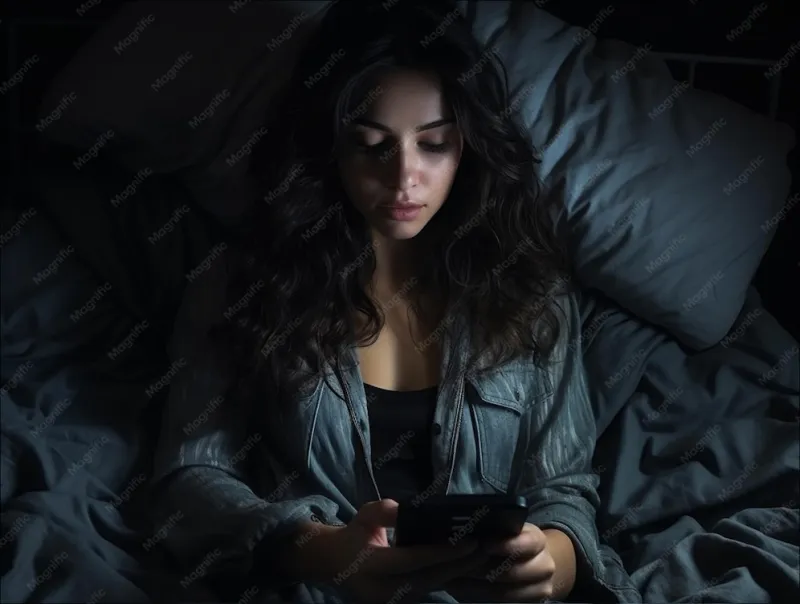
We talked to a few people who study this stuff — not to be preachy about screen time, but to understand the actual mechanics. The short version: notifications are engineered to exploit what neuroscientists call variable reward schedules. It's the same principle behind slot machines. Sometimes the ping means something good (a like, a reply, a funny meme). Sometimes it means nothing. The uncertainty is the hook. Your brain releases a small hit of anticipation dopamine just from the buzz itself — before you even see what it is.
That's the loop. Buzz → anticipation → check → sometimes reward → repeat. After enough repetitions, the loop runs on autopilot. You're not deciding to check your phone. The notification fires the sequence, and your hand moves before your brain catches up.
One participant described it like this on day five: "I picked up my phone to check a notification and by the time I put it down, I had watched three unrelated videos and forgotten what the original notification even was."
Same, honestly.
What You Told Us
We posted a version of our tracking sheet and asked Zestloop readers to log their own notifications for just 24 hours and send us the results. Over 300 people responded. The patterns held up almost universally — that same morning cluster, the evening surge, the email regret, the TikTok time warp. A few standouts from your submissions:
- One reader in Chicago logged 94 notifications in a single day and described it as "a normal Tuesday."
- A reader in Austin discovered that 60% of her notifications came from two apps she said she "barely uses."
- Several people noticed they had notifications enabled for apps they'd completely forgotten downloading.
- One reader turned off all non-contact notifications for the last three days of the experiment and reported feeling "genuinely calmer but also vaguely like I was missing something, even though I clearly wasn't."
That last one is the part that lingers.
So What Do You Actually Do With This?
We're not going to tell you to do a digital detox. That advice is everywhere and it mostly makes people feel guilty rather than better. What the data actually suggests is something more specific: audit your grab rate. For one day, every time you open your phone from a notification, ask whether you're glad you did. Not in a philosophical way — just practically. Did that serve you?
Most of the apps with the highest regret scores in our experiment are still on everyone's phones. That's fine. The goal isn't purity. It's just seeing the loop clearly enough that you can occasionally decide not to run it.
Or don't. Check your phone. We're going to. We already did three times while writing this.
Got your own notification data? Drop it in the comments or tag us. We're genuinely curious whether your patterns match ours — or whether you've somehow escaped the loop.