Your Entire Taste in Music and Movies Was Quietly Decided by a Robot
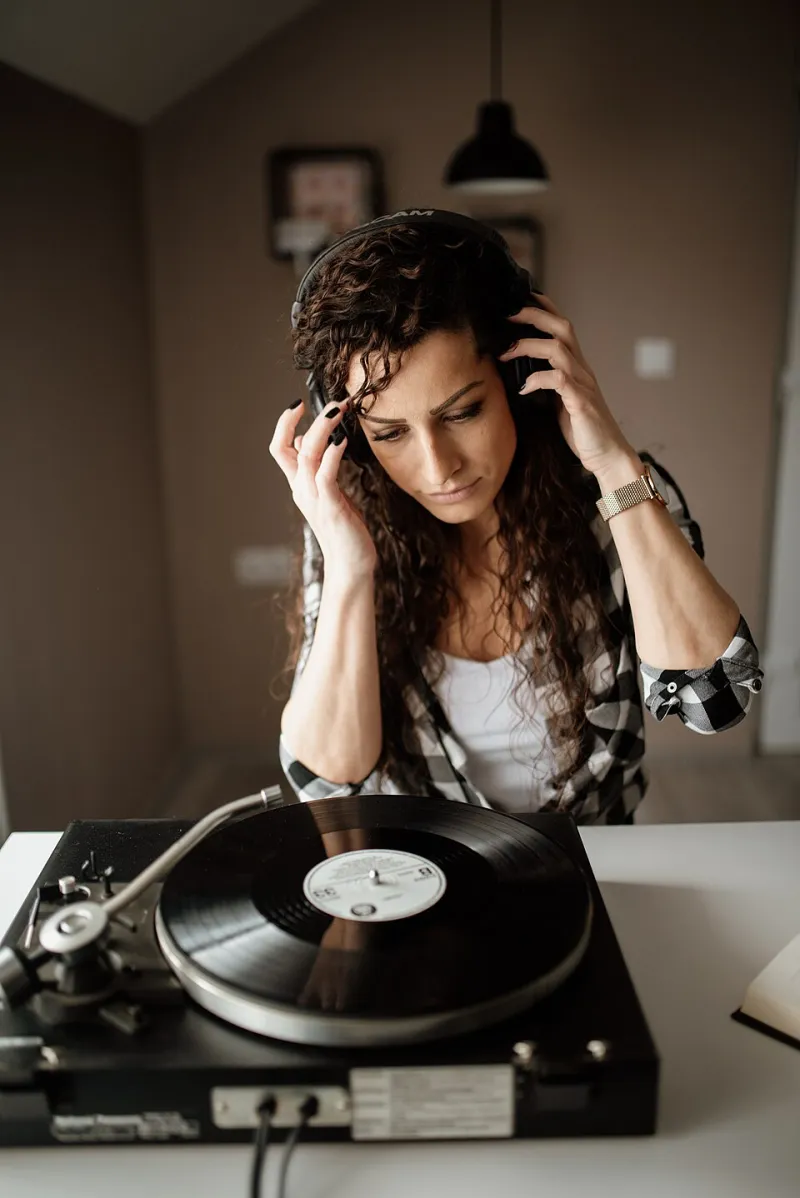
Photo: Shixart1985, CC BY 2.0, via Wikimedia Commons
Here's a thought that'll mess with your head a little: When was the last time you actually found something on your own? Like, you weren't served it. You weren't recommended it. You just stumbled onto it because you were curious and followed your nose.
For a lot of people, the honest answer is... they can't remember.
That's not an accusation. It's just kind of where we are. Spotify builds your Discover Weekly. Netflix queues up the next thing before the credits roll. TikTok's For You Page knows you're going through something even when you won't admit it. The algorithm is always on, always watching, always preloading the next hit of dopamine.
And it's good at it. That's the creepy part.
The Moment People Realized Something Was Off
Marcus, a 29-year-old graphic designer from Austin, had what he calls his "wake-up moment" about two years ago. He was at a house party, music was playing, and someone asked him what kind of stuff he was into lately. He rattled off three artists — and then realized, mid-sentence, that all three had appeared in the same Spotify radio session about six months earlier.
"I hadn't gone looking for any of them," he said. "They just... appeared in front of me, and I liked them, and now I think of them as my taste. But were they ever really?"
That question is deceptively hard to answer. Because the algorithm isn't wrong, exactly. It found things Marcus genuinely enjoyed. But there's a difference between discovering something and being handed it — even if the end result looks the same from the outside.
Jenna, a 34-year-old teacher from Ohio, had a similar reckoning when she audited her Netflix watch history. "Everything I'd watched for like a year and a half was in this narrow little band," she said. "Psychological thrillers, true crime docs, British baking competitions. And I do love those things. But I used to watch all kinds of weird stuff. Foreign films, old comedies, random documentaries about, like, competitive dog grooming. That version of me had basically disappeared."
How the Loop Actually Works
Recommendation systems aren't magic — they're math. At their core, they're doing something called collaborative filtering, which is basically a fancy way of saying: "People who liked what you liked also liked this, so here you go." Layer on top of that some behavioral data (how long you hovered, whether you rewound, what time of day you're watching), and you get something eerily precise.
The result is what researchers sometimes call a "taste bubble" — not quite an echo chamber, but a kind of soft enclosure. You're not being blocked from other content. It's just that the stuff outside your established preferences gets quietly deprioritized. The algorithm bets on what it knows works, because engagement is the goal, not growth.
And here's the uncomfortable part: that model is optimized for the platform, not for you. A version of you that keeps clicking is a successful user. A version of you that gets bored and wanders off to try something totally new? That's a risk.
The People Actively Fighting Back
Some folks have started treating algorithmic resistance like a personal project. There are Reddit communities dedicated to "de-recommending" — actively seeking out content the algorithm would never surface. People share obscure record labels, weird international films, niche podcast feeds, anything that exists outside the mainstream recommendation pipeline.
Daniel, a 41-year-old from Portland, started what he calls his "random dial" practice. Once a week, he picks a genre he's never explored and just... goes in. No ratings, no recommendations, no "because you watched" logic. "Last month I spent an evening watching Senegalese wrestling documentaries," he said, laughing. "I don't even follow sports. But it was genuinely one of the most interesting things I've seen in years."
Others have gone further — deleting streaming histories, resetting recommendation engines, or deliberately clicking on things they'd never normally choose just to "confuse" the algorithm. It's a small act of rebellion, but it feels meaningful to people who do it.
What This Means for Creativity
There's a bigger question lurking under all of this, and it's a little uncomfortable to sit with: If machines are increasingly deciding what gets surfaced and what gets buried, what happens to the weird, uncommercial, hard-to-categorize creative work that doesn't fit neatly into any recommendation category?
Algorithms reward pattern recognition. They amplify what already works. Which means the stuff that's genuinely new — the music that doesn't sound like anything else, the film that defies genre, the comedian doing something nobody's tried — has a harder time finding its audience, because the machine doesn't know where to put it.
Some artists have started gaming this deliberately, packaging experimental work in familiar wrappers just to get past the filter. Others have leaned into niche platforms or direct-to-fan models specifically to avoid the recommendation economy altogether.
So Is It Liberating or Dystopian?
Honestly? Both, probably.
There's something genuinely useful about a system that says, "Hey, you seem to be in a sad-indie-music kind of mood at 11pm on a Tuesday, here's a playlist." That's not nothing. Discovery is hard, attention is limited, and having a smart filter isn't inherently bad.
But there's also something lost when the loop closes too tightly. When the version of yourself that used to stumble into weird, unexpected things just... stops showing up. When your taste becomes a feedback loop instead of a living, evolving thing.
The algorithm knows what you've liked. It doesn't know what you haven't tried yet. And that gap — between your documented history and your potential future tastes — is where the most interesting stuff lives.
Maybe that's worth protecting a little.
Even if it means watching a documentary about competitive dog grooming on a random Tuesday, just because you picked it yourself.