Designed to Leave You Empty: The Hidden Architecture That Keeps You Scrolling Back for More
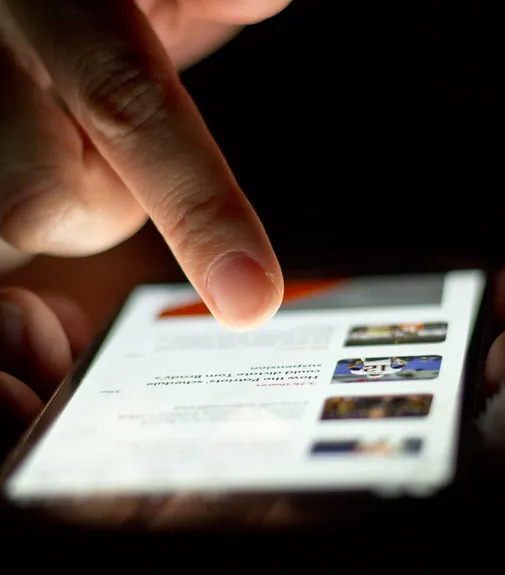
Photo: Japanexperterna.se, CC BY-SA 2.0, via Wikimedia Commons
You've probably had this experience: you open an app to kill five minutes, and forty-five minutes later you put the phone down feeling vaguely worse than before. Not bad exactly. Not good. Just... hollow. Like you ate something that had no nutritional value but somehow still left you craving more.
That feeling has a name in the design world. Some engineers call it the slot machine loop. Others, more bluntly, call it the loneliness engine. And according to a growing number of former tech insiders, it isn't accidental.
The App That Needs You Unhappy
Here's a counterintuitive truth about social media platforms: if you feel genuinely satisfied after using them, you're less likely to come back. Satisfaction is the enemy of engagement. What keeps the numbers up — daily active users, session length, return rate — is a very specific kind of emotional incompleteness.
Former product designers at major platforms have started speaking publicly about this in recent years. The pattern they describe is consistent: features weren't just optimized for enjoyment. They were optimized for a feeling of almost — almost connected, almost caught up, almost satisfied. Close enough to feel meaningful, not close enough to let you go.
One ex-designer who worked on a major short-video platform described the internal framing this way: "We weren't trying to make people happy. We were trying to make people feel like happiness was one more scroll away."
That's not a side effect. That's the architecture.
What Infinite Scroll Actually Does to Your Brain
Before infinite scroll existed, social media feeds had endings. You'd reach the bottom of a page, click "load more," and that small friction — that tiny pause — gave your brain a moment to check in with itself. Am I still enjoying this? Do I want to keep going?
Infinite scroll removed that pause entirely. When Aza Raskin, the designer credited with inventing the feature, publicly reflected on it years later, he estimated that infinite scroll alone drives around 200,000 extra hours of scrolling per day across platforms. He called it one of his biggest regrets.
Neuroscientists studying dopamine pathways explain why the design is so effective. The brain's reward system responds most powerfully not to guaranteed rewards, but to variable rewards — the possibility of something good, delivered unpredictably. It's the same mechanism behind slot machines. Every scroll is a pull of the lever. Most of what comes up is neutral or forgettable. But occasionally something lands — a funny video, a post that makes you feel seen, a piece of news that feels important — and that intermittent hit is enough to keep the behavior locked in.
The scroll never ends because the reward never stops being possible.
The FOMO Factory
Fear of missing out isn't new. Humans have always been wired to monitor social belonging — it was genuinely useful for survival at one point. But modern platforms have turned that ancient anxiety into a precision instrument.
Consider how feeds are designed to surface content. Algorithms don't show you a chronological record of what people posted. They show you a curated selection optimized for emotional response — which, in practice, tends to mean things that provoke envy, outrage, or the nagging sense that everyone else is living a more interesting life than you.
The result is a specific flavor of loneliness that didn't really exist before smartphones. Not the loneliness of being isolated — but the loneliness of watching a highlight reel of other people's lives while sitting alone in your apartment. Researchers have started calling this social comparison fatigue, and studies consistently link heavy social media use to increased feelings of inadequacy and social disconnection, even among people with active offline social lives.
One neuroscientist studying digital behavior put it plainly: "The platforms give you just enough social signal to activate your belonging instincts, and then pull it away. You feel the absence more acutely than you would have if you'd never opened the app."
The Notification Is a Leash
Push notifications deserve their own moment here, because they're one of the most direct mechanisms in the loneliness loop.
Notifications are designed to feel personal. Someone liked your photo. Someone commented on your post. Someone is thinking about you. The language is intimate. The implication is that you matter to someone right now, in this moment, and you should come see.
Except when you get there, it's usually not that intimate. It's an algorithmic nudge dressed up as human connection. The platform needed you back, so it manufactured a social event compelling enough to break through whatever you were doing.
Former engineers have described A/B testing notification copy specifically to find language that triggered the highest return rates — not the most accurate language, not the most honest language, but the language that made people feel most urgently needed. The results, they say, consistently favored phrasing that implied social stakes.
In other words: the ping that feels like someone reaching out is often just an app reaching into your nervous system.
Breaking the Loop — Actually
Here's where most articles like this offer vague advice about "digital wellness" and "mindful usage" that sounds reasonable and is almost impossible to implement. We're going to try to be more specific.
Reintroduce friction deliberately. Infinite scroll works because it removed the natural pause. You can add it back. Set a screen time limit that requires you to tap through a confirmation to keep scrolling. That one extra step is often enough to let your brain check in.
Turn off variable reward notifications. Keep notifications for direct messages from actual people. Turn off likes, comments on your posts, algorithmic recommendations, and anything that says "you might like this." These are slot machine pulls, not social connection.
Use apps in browser instead of native apps where possible. The mobile browser version of most social platforms is deliberately worse — slower, less optimized, missing features. That friction is useful. It makes the experience feel more like a choice and less like a reflex.
Name what you're feeling before you open an app. This sounds corny, but it works. Boredom, loneliness, and anxiety each lead to different kinds of scrolling behavior, and knowing which one you're feeding makes it harder to do it unconsciously.
Set a specific intention. Instead of opening Instagram to "check it," open it to look at three specific accounts you actually care about. Then close it. The goal-less browse is where the loop lives.
The Longer Game
None of this is about demonizing technology or pretending the internet isn't genuinely useful and often fun. It's about understanding that the tools you use every day were built by people with specific goals — and those goals don't always overlap with yours.
The loneliness loop works because it mimics connection closely enough to feel real in the moment, and leaves you just empty enough to want more. Recognizing that mechanism doesn't make you immune to it. But it changes the relationship.
You're not weak for falling into the scroll. You're up against systems built by some of the most sophisticated behavioral engineers on earth, backed by billions of dollars and decades of psychological research.
Knowing that is the first exit ramp off the loop.
Take it when you can.