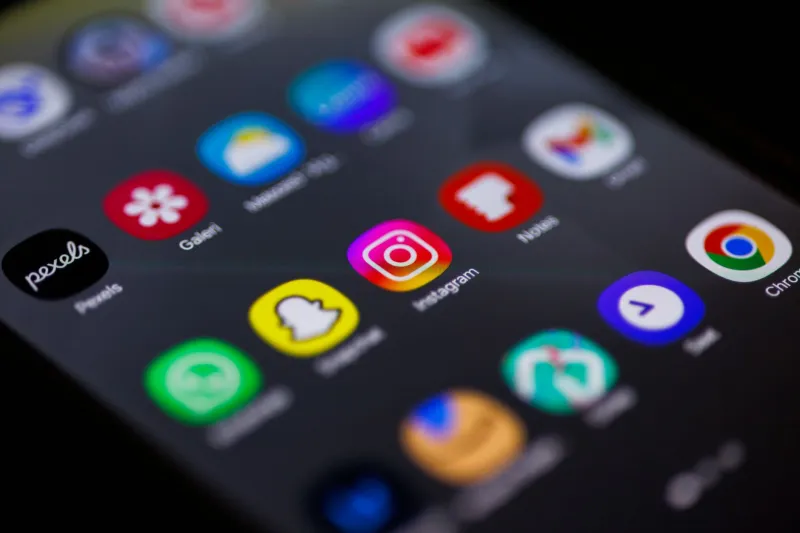
You Silenced Everything and Now You're Scared of the Quiet

The Great Mute-Off Nobody Talks About
Somewhere between your third Slack workspace and your fourteenth app asking permission to send you "helpful reminders," you snapped. You went full scorched earth. Notifications: off. Badges: gone. Banners: abolished. You built yourself a fortress of silence and called it a wellness practice.
And yet — here you are, compulsively opening apps that have absolutely nothing new to show you, refreshing email threads that haven't moved in days, and experiencing a low-grade hum of dread that you can't quite locate. Something is wrong. Or maybe nothing is wrong. That's actually the part that's messing with you.
Welcome to the notification graveyard: a place millions of Americans have built for themselves and then immediately become haunted by.
What Gets Muted First (And Why That Order Matters)
When researchers and casual surveys alike ask people which notifications they disable first, the pattern is surprisingly consistent. Work communication apps — think Slack, Teams, your company's preferred chaos platform — get silenced early. Then come group chats, particularly family ones. News apps follow close behind, usually after one too many breaking-news alerts about something that turned out to be decidedly un-breaking.
What survives the purge the longest? Direct messages from actual humans, calendar reminders, and anything tied to money. We're pragmatic when it counts.
But here's the thing nobody really examines: the order you mute things in tells a pretty honest story about what you're actually running from. Muting work first suggests the anxiety was never about information overload — it was about obligation. Muting news suggests you're not tuning out the world so much as protecting yourself from a specific emotional response to it. The mute button isn't a preference setting. It's a coping mechanism wearing a very convincing disguise.
The FOMO Paradox That's Quietly Eating You Alive
Psychologists have a term for what happens when you remove a stressor and then immediately start stressing about having removed it: reactance. It's the same force that makes forbidden things feel more appealing, and it works on information the same way it works on everything else.
Turn off the notifications, and suddenly your brain — which was previously annoyed by the constant interruptions — decides that those interruptions were actually important. It starts filing quiet reports: What if someone needed you? What if something happened? What if the group chat moved on without you and now there's an entire inside joke you'll never fully understand?
This is the FOMO paradox at its most absurd. You were overwhelmed by the noise. You eliminated the noise. You are now anxious about the absence of noise. Your nervous system has essentially become a person who complains about the restaurant being too loud, then complains when the music stops.
Research on what's sometimes called "fear of missing out" consistently shows that the anxiety isn't really about missing specific content — it's about social belonging and status monitoring. Your brain doesn't actually care about the notification. It cares about what the notification represents: that you are connected, visible, and included. Strip that away, and the brain starts asking uncomfortable questions.
Confessions from the Fully Silenced
Talk to people who've gone all the way — full silent mode, do-not-disturb from sunup to sundown, the whole deal — and you get a pretty divided response.
Some people describe it as genuinely transformative. One person described the first week as "withdrawal," followed by a second week that felt like "coming up for air after years underwater." Another said she didn't realize how much of her mental energy was being spent anticipating notifications until she removed them entirely. The anticipation, she said, was worse than the actual pings.
But plenty of others hit a wall. A guy in his late twenties described going full silent mode for a month and discovering that he'd developed a habit of checking every app manually, on a rotation, roughly every eleven minutes. He hadn't reduced his information consumption at all. He'd just made it more labor-intensive. The anxiety found a workaround.
That's the part nobody puts in the productivity blog posts: muting notifications doesn't mute the impulse. It just reroutes it.
The Phantom Buzz Is Real and It Has a Name
If you've ever felt your phone vibrate in your pocket when it absolutely did not vibrate, you've experienced what researchers call "phantom vibration syndrome" — and it affects somewhere between 70 and 90 percent of smartphone users, depending on the study. It's your brain's pattern-recognition system running hot, trained by years of conditioning to expect a signal.
The wild part is that phantom buzzes don't go away when you mute your phone. If anything, some people report experiencing them more after going silent, because their brain is now actively scanning for a signal it's been told to stop expecting. Silence doesn't reset the conditioning. It just leaves the machinery running with nothing to process.
This is probably the clearest illustration of why notification anxiety isn't a feature of the apps — it's a feature of the person using them. The apps just gave the anxiety a shape.
What the Quiet Is Actually Telling You
Here's an uncomfortable reframe: maybe the discomfort you feel in the silence isn't a malfunction. Maybe it's information.
A lot of people who've gone deep into notification detox describe eventually arriving at a kind of clarity — not about their apps or their devices, but about themselves. One woman said she realized she'd been using the constant stream of pings as a way to avoid sitting with her own thoughts. Another described discovering, in the quiet, that he didn't actually enjoy most of the relationships he'd been maintaining through group chats. He'd been performing connection rather than experiencing it.
The notification graveyard, it turns out, is less a place where alerts go to die and more a mirror you accidentally built. What you feel when the noise stops isn't emptiness — it's you, without the distraction buffer.
That can be a lot to sit with. But it's also kind of the point.
So Do You Turn Them Back On?
There's no clean answer here, which is probably annoying if you came looking for a five-step plan. Some people find a middle path — selective notifications, specific time windows, certain contacts only — that gives their brain enough signal to stop panicking while still reclaiming some actual peace.
Others decide the discomfort of silence is worth pushing through, that the anxiety eventually settles into something quieter and more manageable.
What almost nobody recommends, after going through the whole experiment, is going back to the default settings. Not because silence is inherently better than noise, but because the default settings were never designed with your wellbeing in mind. They were designed to keep you engaged, checking, and available — which is a great deal for the apps and a pretty mediocre deal for you.
The notification graveyard is yours. What you do with the quiet is the interesting part.