Eight Thousand People Told Us What They Do the Second They Close Their Laptop — And It's Basically the Same Five Things
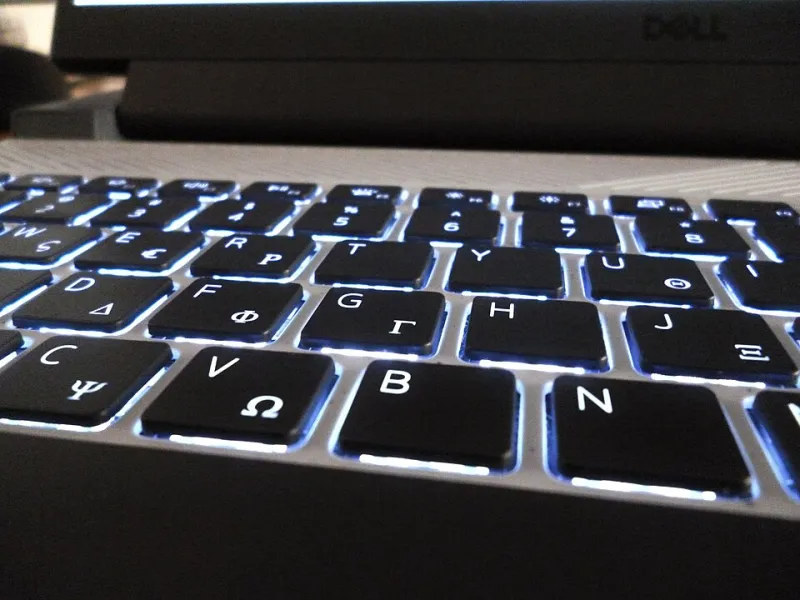
Photo: Gre123gr, CC0, via Wikimedia Commons
There's a moment — maybe you know it well — where the laptop lid clicks shut and your whole body lets out this involuntary exhale. Like a pressure valve releasing. You didn't plan it. You didn't schedule it. But whatever comes next? That's where it gets interesting.
We asked 8,247 people across the US one simple question: What's the very first thing you do after closing your laptop? No prompts, no multiple choice. Just a blank text box and whatever came to mind. The answers ranged from deeply mundane to genuinely surprising — but the patterns that emerged? Oddly, almost suspiciously, consistent.
The Big Five (You're Probably In Here Somewhere)
Before we get into the weird stuff, let's talk about what the majority of people said. Five behaviors showed up so frequently they accounted for nearly 68% of all responses.
1. Standing up and stretching — specifically the neck. Not just stretching in general. People were weirdly specific about tilting their head side to side, rolling their shoulders, or cracking their back. One respondent from Ohio wrote: "I do this thing where I tilt my head until my neck makes that sound and then I feel like a new person." She is not alone. Roughly 1 in 4 respondents mentioned a physical reset of some kind, and the neck was the star of the show.
2. Getting a drink — usually water, sometimes not. Around 22% of people said they go straight to the kitchen for something to drink. Water was the most common, but a notable chunk said "a glass of wine" or "honestly, whatever's in the fridge." The interesting thing here is the immediacy — not "I eventually get a drink" but "the first thing I do." Hydration as punctuation.
3. Picking up their phone. Here's where it gets a little ironic. A solid 19% of respondents said the first thing they do after leaving one screen is immediately pick up another one. Several people added a self-aware note like "I know, I know" or "don't judge me." We're not judging. We're just logging it.
4. Going outside — even just to the porch or backyard. About 14% mentioned stepping outside, even briefly. Fresh air, a cigarette, checking the mail, staring at the sky for thirty seconds. The specifics varied but the impulse was the same: get out from under the ceiling.
5. Talking to someone in the house. Whether it was a partner, a kid, a roommate, or a dog (dogs got significant mentions), roughly 11% of people said their first instinct was to make human — or animal — contact. One person from Georgia wrote: "I go find my husband just to say something out loud. I don't even care what."
The Outliers Are Where It Gets Good
Okay, the top five are relatable. But the remaining 32% of responses? That's where the survey got genuinely interesting.
A recurring theme was what we started calling "physical proof of existence" behaviors. People washing their face immediately after closing the laptop. Changing clothes even if they'd only been working for two hours. One person from Portland said they always make their bed after finishing work, even at 9pm, because "it feels like starting over." Another respondent said they splash cold water on their wrists — not their face, specifically their wrists — and described it as "resetting my system."
Then there were the sensory resets — lighting a candle, turning on music (not a podcast, specifically music), or cooking something that smells strong. Onions came up more than once. The pattern seems to be: if screens are visual and auditory in a very controlled, digital way, people want to come back to something raw and analog.
And then — our personal favorite category — were the completely unexplainable micro-rituals that people offered up with zero context. "I spin around once in my chair before I stand up." "I close my eyes for exactly ten seconds." "I say 'okay' out loud to no one." These weren't jokes. People wrote them earnestly, and honestly? We respect it.
So What's Actually Happening Here?
Psychologists who study behavioral transitions — the small moments between one mode of being and another — call these kinds of actions "threshold rituals." They serve as psychological bookmarks, telling your brain that one chapter is done and another is beginning.
What's striking about our data is how physical most of these rituals are. Stretching, drinking, stepping outside, touching another person. Almost like the body is filing a complaint after being ignored for hours and demanding acknowledgment.
There's also something worth noting about the phone-reaching behavior. It doesn't seem to be about content — most people who mentioned it said they weren't really doing anything on their phone, just holding it or scrolling briefly. It may be less about screens and more about the familiar weight of the object. A security blanket with a notification badge.
Does Any of This Actually Help Us Decompress?
Here's the honest answer: probably some of it, some of the time. The behaviors most consistently described as satisfying — the ones where people added words like "finally" or "immediately feel better" — were the physical ones. The stretch, the drink, the step outside.
The phone grab, by contrast, was almost universally described with mild regret. Not guilt exactly, just a vague sense of having not quite landed anywhere.
What all of it suggests is that we're all collectively improvising a transition that our brains actually need and our culture hasn't really designed for us. There's no ceremony for closing a laptop the way there's a ceremony for leaving an office — no commute, no colleague saying "see you tomorrow," no elevator ride to decompress in.
So we make our own. We crack our necks and pour water and say "okay" to empty rooms.
And somehow, weirdly, it works.
Got a post-laptop ritual that didn't make the list? Tell us in the comments — we're still collecting.