We Made People Open Their Junk Drawer and Narrate Everything Inside — It Got Emotional
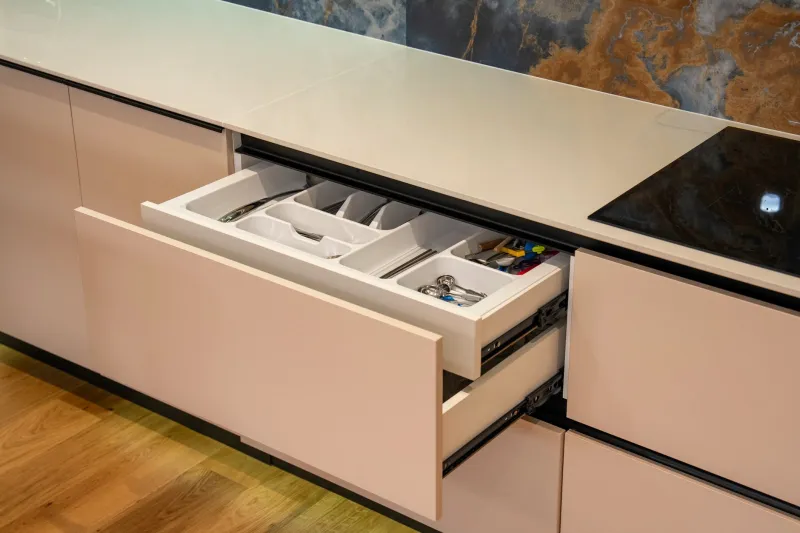
There is one universal truth of American domestic life, and it's not apple pie or baseball. It's the drawer.
You know the one. Every home has it — the kitchen drawer (or hallway drawer, or desk drawer) that defies all categorization. It's not organized, but it's not trash, either. It's a liminal space where objects go to await a purpose that may never come.
We asked readers to do something simple and slightly unhinged: open the drawer, take out every item, and explain it. Not justify it. Just explain it. Hundreds of people played along, and what we found was part archaeology, part group therapy.
The Official Junk Drawer Census
After cataloging the submissions, here's the taxonomy of what America is keeping in there:
The Dead Battery Colony. Present in roughly 90% of drawers. Notably, almost none are confirmed dead — they're presumed dead, which is a different thing entirely. Nobody is willing to test them.
The Condiment Packets. Soy sauce, taco sauce, ketchup from a fast food run in what one reader described as "a different era of my life." These packets have never been used. They never will be used. They are decorative now.
The Mystery Keys. The single most haunting category. Keys to cars that were sold, apartments from previous lives, padlocks that no longer exist. One reader wrote: "I have four keys and I can account for one of them. I will be keeping all four."
The Manual-Repair Kit. A single screwdriver (flathead, always flathead), a roll of electrical tape slowly fusing into a solid object, and a rubber band from a newspaper delivery that ended years ago.
The Emotional Artifacts. This is where it got heavy. A spare button from a jacket that belonged to a late parent. A birthday candle saved "in case." A fortune cookie fortune that reads, according to one submission, "Your talents will be recognized soon" — dated 2014.
Why We Can't Quit the Drawer
Here's the thing that surprised us: when people explained why they keep the drawer, the answers got philosophical fast.
The dominant theory is that the junk drawer is a pressure valve. In a world where we're told every drawer should be color-coded and every pantry should be a Pinterest grid, the junk drawer is the one square foot of your home where the rules don't apply. It's the drawer's job to absorb the chaos so the rest of the house can pretend.
As one reader put it: "The junk drawer isn't disorganization. It's containment."
There's also the optimism factor. Every dead battery in that drawer represents a person who believes, on some level, that they will one day test it. Every takeout menu for a restaurant that closed represents a person who meant to try it. The junk drawer is a museum of good intentions, and you don't throw away a museum.
The Drawer Audit: Try It Yourself
If you're brave, here's the protocol:
- Open the drawer. Don't fix anything. This is not a cleaning video.
- Pick up each item, one at a time.
- Say out loud what it is and why it's there. If you can't explain an item, it earns the title of Official Drawer Mystery — record holder so far: half a deck of cards.
- Put everything back. Yes, everything. That's the whole point.
What you'll probably discover is that the drawer isn't really about the objects. It's a little archive of your household's entire history — the takeout phase, the hardware phase, the phase where you definitely were going to fix that thing.
The junk drawer holds everything that doesn't fit anywhere else, which, if you think about it, is a pretty generous thing for one drawer to do. Keep the drawer. Keep the keys. Maybe throw out the batteries that are visibly leaking.
Actually, yes — throw out the leaking ones. That's the line.